

Interior Design vs. Home Staging: What's the Difference (and Which One Do You Need)?
If you've ever stood in your living room wondering whether you need an interior designer or a stager, you're not alone. The two get lumped together constantly, and it's easy to see why: both use furniture, both make a room look beautiful, and both promise to transform your space. But they're solving two completely different problems, and picking the wrong one can cost you time, money, or both.
Quick answer: Interior design is for living in a home long-term. Staging is for selling it fast. The confusion happens because both use furniture and both make a room look beautiful — but they're solving two completely different problems.
What Is Interior Design?
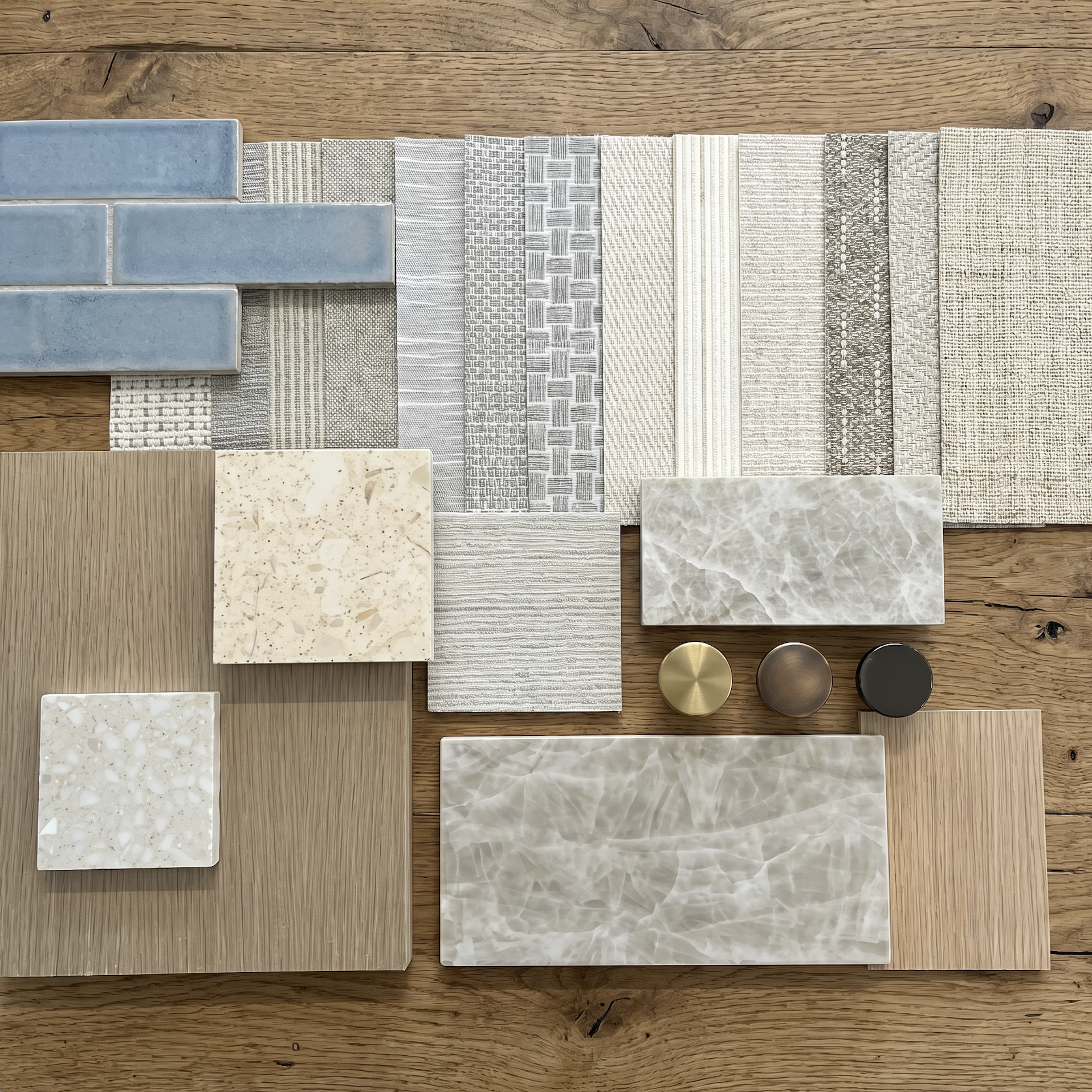
Interior design is built around one question: how do you want to live in this space? It's personal, it's ongoing, and it evolves with you. A designer starts with your daily habits, the way your family actually moves through a room, and the way you want to feel when you walk in the door after a long day. The furniture, the finishes, the layout, all of it is chosen to support your life, not a stranger's first impression.
The timeline reflects that. A design project isn't finished when the paint dries. It's meant to hold up for years, sometimes decades, and it's meant to be lived in, not just looked at. A well-designed kitchen should still make sense five years from now, after two more holidays' worth of cooking and a few more family gatherings around the island. A well-designed nursery should be able to grow into a child's room without a full teardown. That kind of durability is only possible when every decision starts with how the space will actually be used, not how it will photograph on day one.
That's also where the investment logic changes. When you invest in design, you're paying for daily enjoyment and long-term value: pieces that get better with age, layouts that flex as your family grows, and a home that feels like an accurate reflection of you every single day you're in it. It's an investment in your own quality of life first, and in resale value second, if at all. Most clients who come to us for design aren't thinking about a future buyer. They're thinking about tonight's dinner, next year's holidays, and the next decade of mornings in that kitchen.
What Is Home Staging?
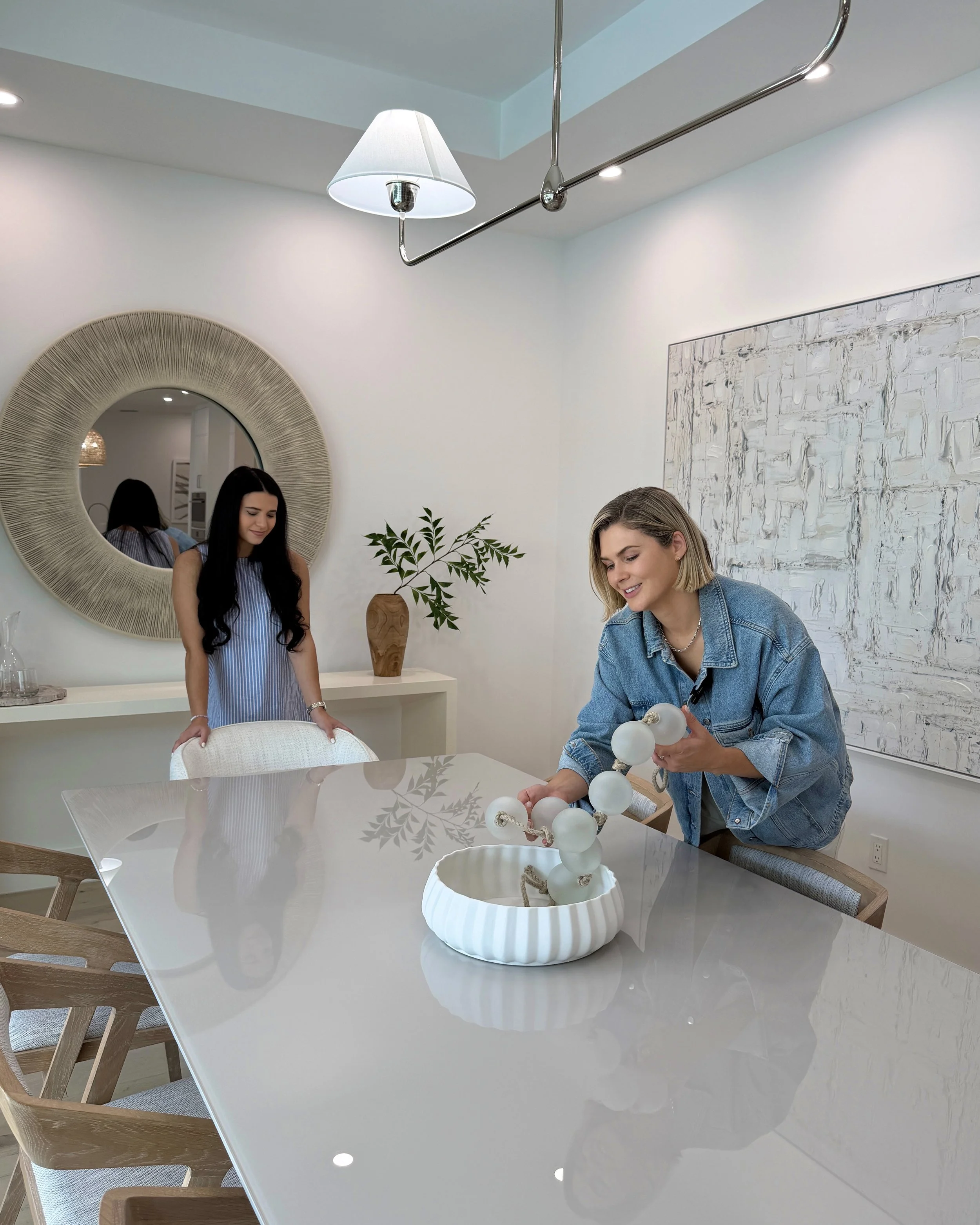
Staging is built around a completely different question: what does a buyer feel in the first seven seconds of walking through the front door? That's not an exaggeration. Buyers form an emotional impression of a home almost instantly, and staging exists to make that impression work in your favor.
Where design is personal, staging is deliberately neutral. It's built to help the widest possible pool of buyers picture themselves living there, which means the furniture, the styling, and even the scent in the air are chosen for broad appeal, not individual taste. A stager isn't asking what you love. She's asking what a buyer touring five other homes that same afternoon will remember about yours.
And where design is ongoing, staging is temporary by nature. It exists for exactly as long as the home is on the market, and it's priced and planned around that window. The furniture is typically rented for the listing period, arranged, photographed, and then removed the moment the deal closes. Nothing about staging is meant to last, because its only job is to perform during showings and in listing photos.
This is where the return on investment gets concrete. Staged homes typically spend less time on the market and sell closer to (or above) asking price than comparable unstaged listings. On a high-value listing, that difference in days-on-market and final sale price can be significant. That's the entire argument for staging: it's not decoration, it's a financial strategy with a defined start and end date, chosen because every extra day a home sits unsold, or every showing where a buyer can't picture themselves in the space, carries a real cost.
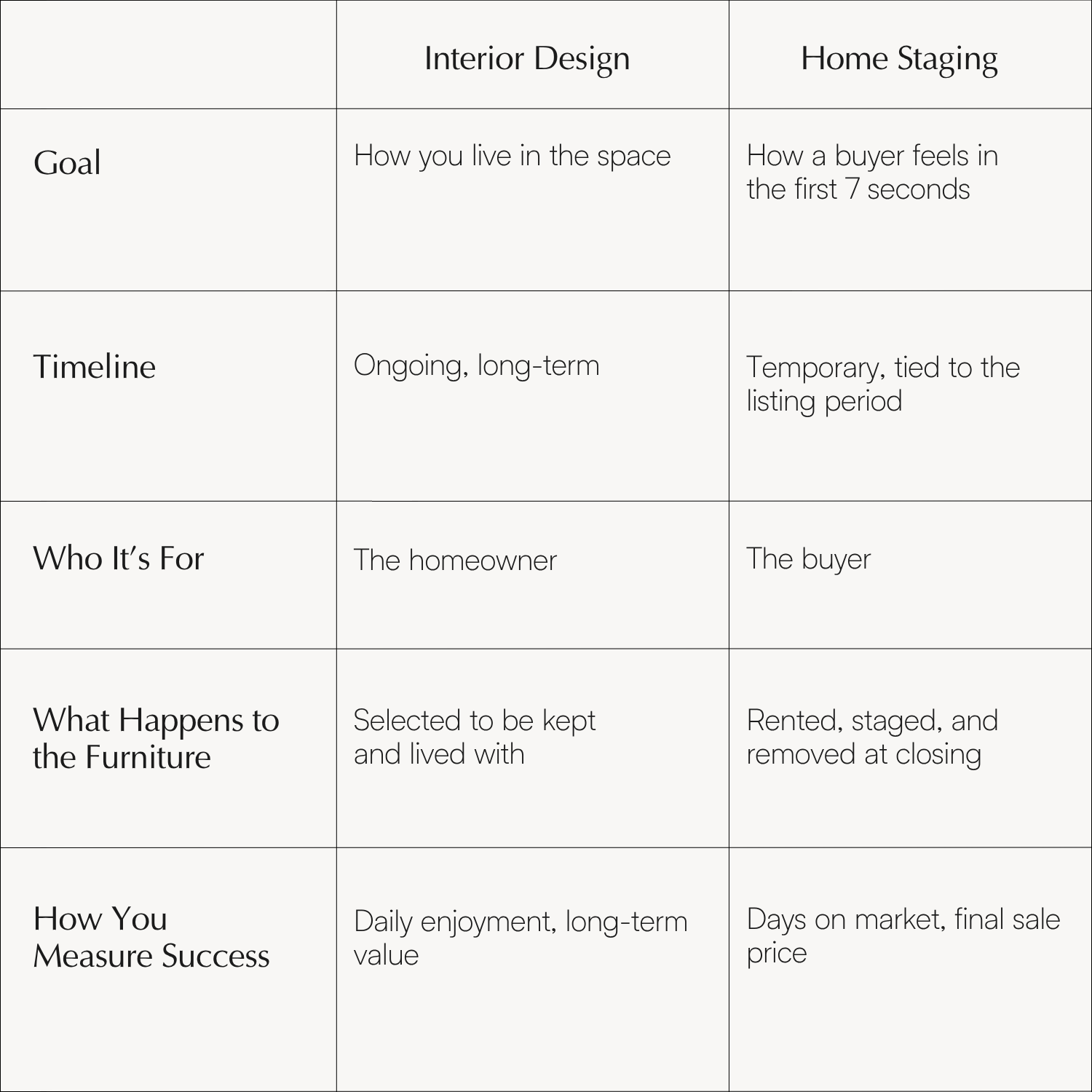
Interior Design vs. Home Staging at a Glance
When You Actually Need Both
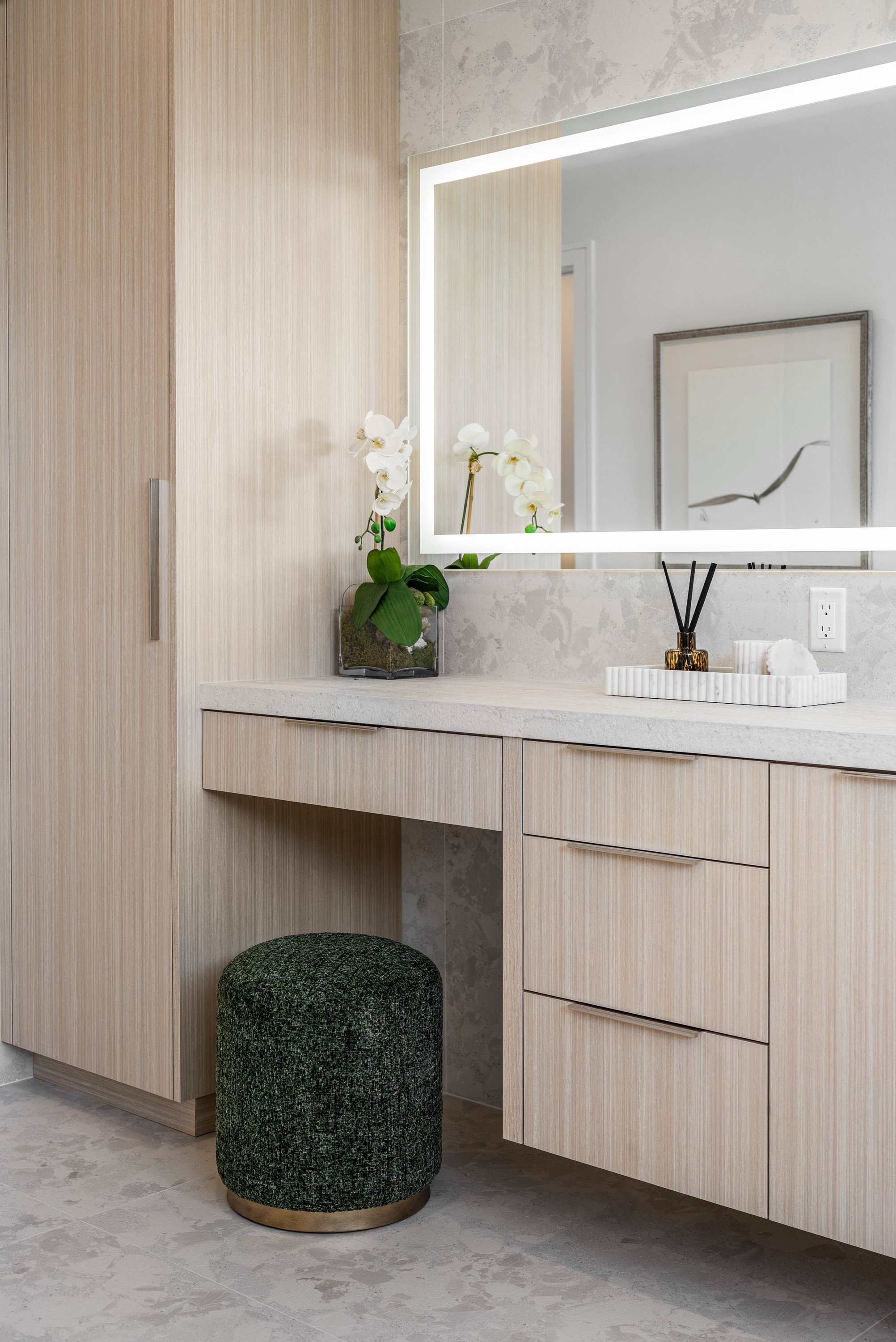
There are two situations where design and staging aren't competing options, they're both necessary, just at different moments.
The first is new-build and developer projects. A model home or a spec home needs to be staged to sell, appealing to the broadest possible buyer pool while it's on the market. But once a buyer purchases the home and wants to move in with their own sense of style intact, that's a design conversation that starts the day staging ends. We see this constantly with developer clients: the staged model does its job attracting buyers, and then real design work begins the moment keys change hands.
The second is homeowners who plan to stay long-term but eventually decide to sell. This is the scenario I run into constantly, given my background in real estate before I moved into design. A client will furnish and design a home to live in for years, and then life changes: a job relocation, a downsize, a growing family that needs more space. When that happens, the home needs to shift from "designed to be lived in" to "staged to be sold," and that's a genuinely different exercise. Some of the furniture that made the home feel personal and lived-in needs to come out, because what felt warm and specific to your taste can feel small or dated to a buyer scanning the room for the first time. Understanding both sides of that transition, what to keep, what to remove, and how to restyle a space that was never built with resale in mind, is what makes the shift smooth instead of jarring.
How REH Approaches This Differently
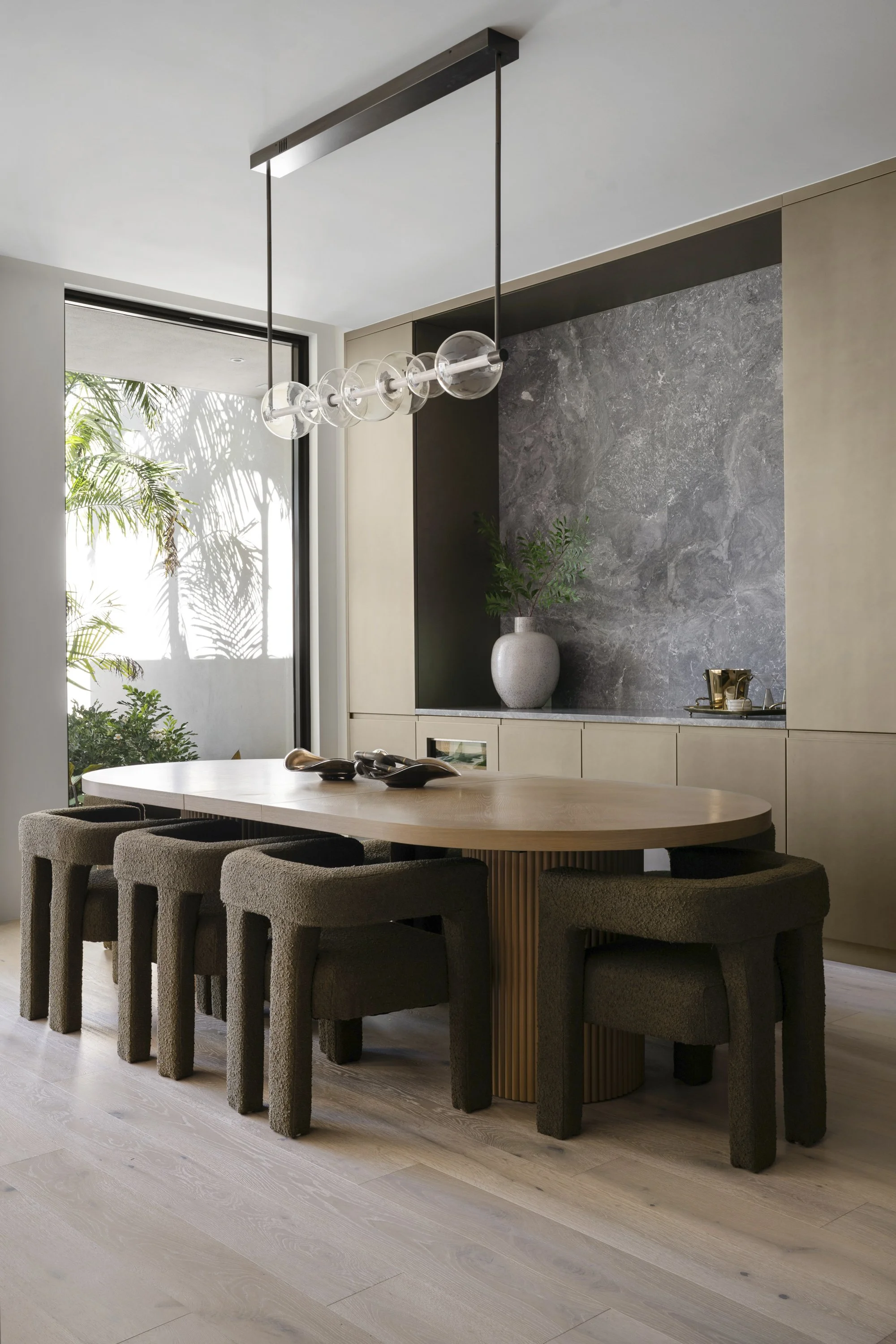
Because our team understands both buyer psychology and design principles, we don't default clients into whichever service is easiest to sell. We ask what the home needs to do right now, live in beautifully or sell quickly, and we build the plan around that answer. Sometimes that means a full design project. Sometimes it means a focused staging engagement. And sometimes, especially with new builds or homeowners approaching a sale, it means both, sequenced correctly so neither effort undercuts the other. That real estate background matters here too. Knowing how buyers actually move through a home during a showing changes the way we think about design decisions long before a home is ever listed.
Not Sure Which One You Need?
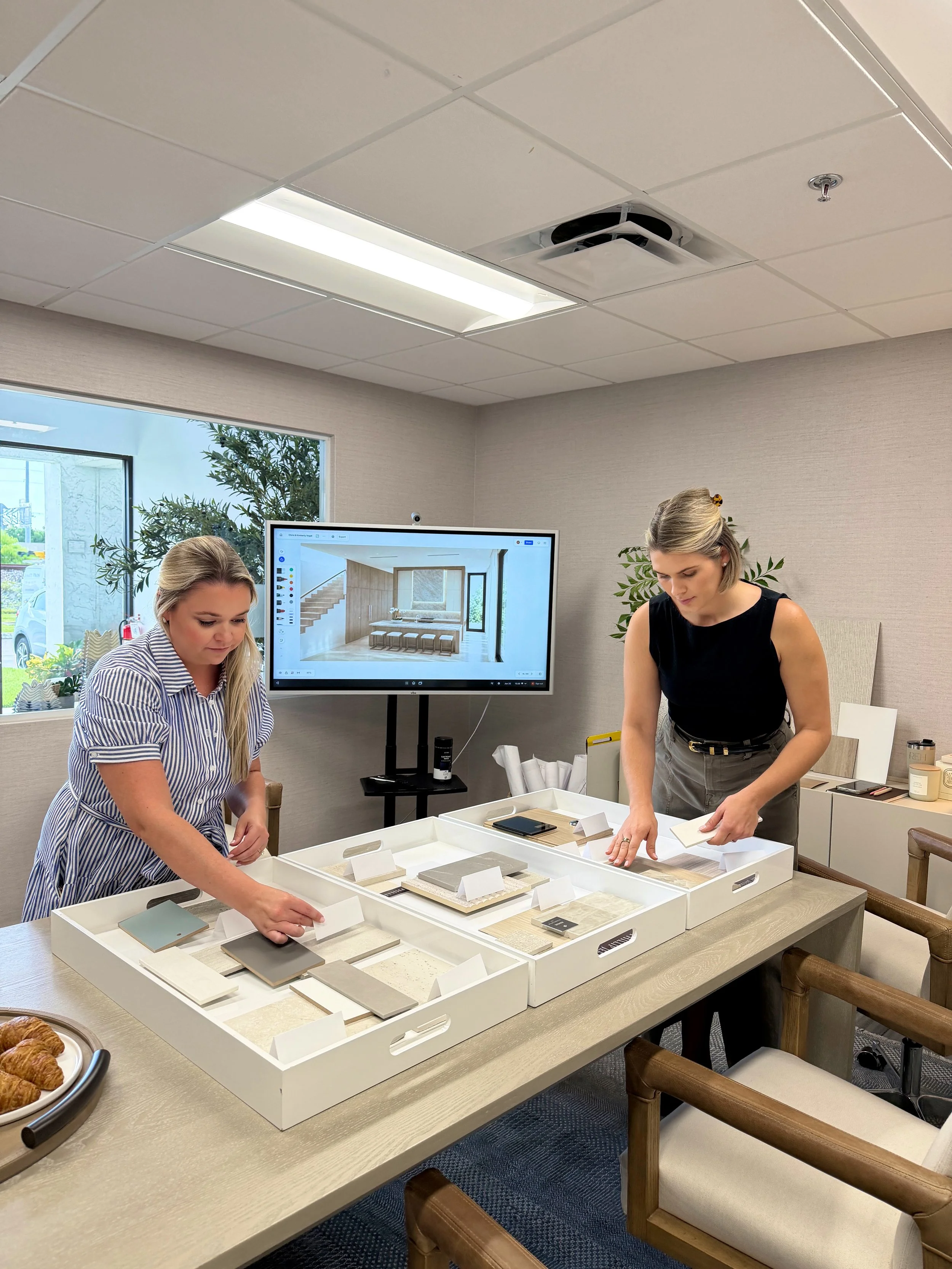
Contact us and we'll walk through your specific situation, your timeline, and your goals.
Explore our Interior Design services and Luxury Home Staging services to see examples of each in action.
Explore our Interior Design services and Home Staging services to see examples of each in action.